Cheese toasties – happy birthday, Jane Austen
This week marks the 250th anniversary of the birth of Jane Austen, concluding a year of events held in her honour. On which note, it is a truth universally acknowledged – or at least it should be – that Jane Austen was partial to a cheese toasty.
‘We were greatly surprised by Edward Bridges’ company... It is impossible to do justice to the hospitality of his attentions towards me; he made a point of ordering toasted cheese for supper, entirely on my account.’
Jane Austen to Cassandra Austen, 27 August 1805 (Jane Austen’s Letters, ed. Deirdre Le Faye)
The exact recipe for ‘toasted cheese’ that Jane enjoyed at home is included in the handwritten book of recipes compiled by her close friend, Martha Lloyd. Martha’s sister, Mary, was married to Jane’s brother, James. When Jane, her sister Cassandra and their mother moved to the Hampshire village of Chawton in 1809, Martha went with them. While Jane was busily writing her novels, Martha was continuing to expand her book of recipes and remedies that sustained the Austen family.
Emily Blaauw’s recipe book is a very similar artefact and also includes a recipe for toasted cheese sandwiches, given to her by her aunt, Lydia Martin, who was a contemporary of Jane Austen and Martha Lloyd.
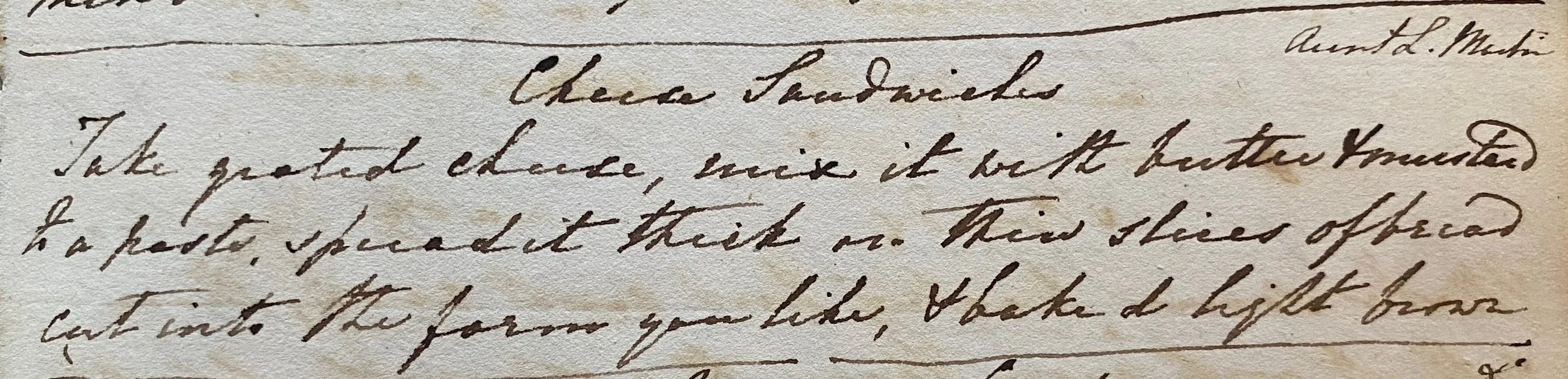
Cheese Sandwiches / Aunt L. Martin
Take grated cheese, mix it with butter & mustard to a paste, spread it thick on thin slices of bread cut into the form you like, & bake it light brown.
The only difference between Martha’s and Lydia’s recipes is that Martha’s includes an egg in the mixture, which I tried and is delicious. This has become a regular lunchtime meal for me! It is curious that Emily has described this recipe as a ‘cheese sandwich’ which typically referred to a filling between two bits of bread, an invention attributed to John Montagu, 4th Earl of Sandwich (1718–92) and dating back to at least 1762.
Emily was 10 years old in 1809 when the Austen women moved to Chawton, which is about six miles from Froyle Place, the home of Emily’s widowed grandfather, Sir Thomas Miller. Emily spent much of her childhood here, in the company of various Miller relatives, following the untimely death of her mother in 1803. Several of Emily’s recipes are associated with Froyle. But what is intriguing to wonder (though not, as yet, evidenced by fact) is whether the Millers of Froyle Place were acquainted with the Knights of Chawton House. Known to Jane as the Great House, Chawton House was one of the homes of her brother, Edward (Austen) Knight. Just supposing that, like Mr and Mrs Bennett in Pride and Prejudice, the Millers ‘dine with four-and-twenty families’, is there a possibility that they may have been invited to dine at Chawton House?
Today, Chawton House is home to an important collection of books and manuscripts by women writers, spanning the two centuries from 1660 to 1860, including several recipe books. And the afternoon tea available in Chawton House’s wonderful old kitchen is an absolute treat; they also serve cheese toasties …
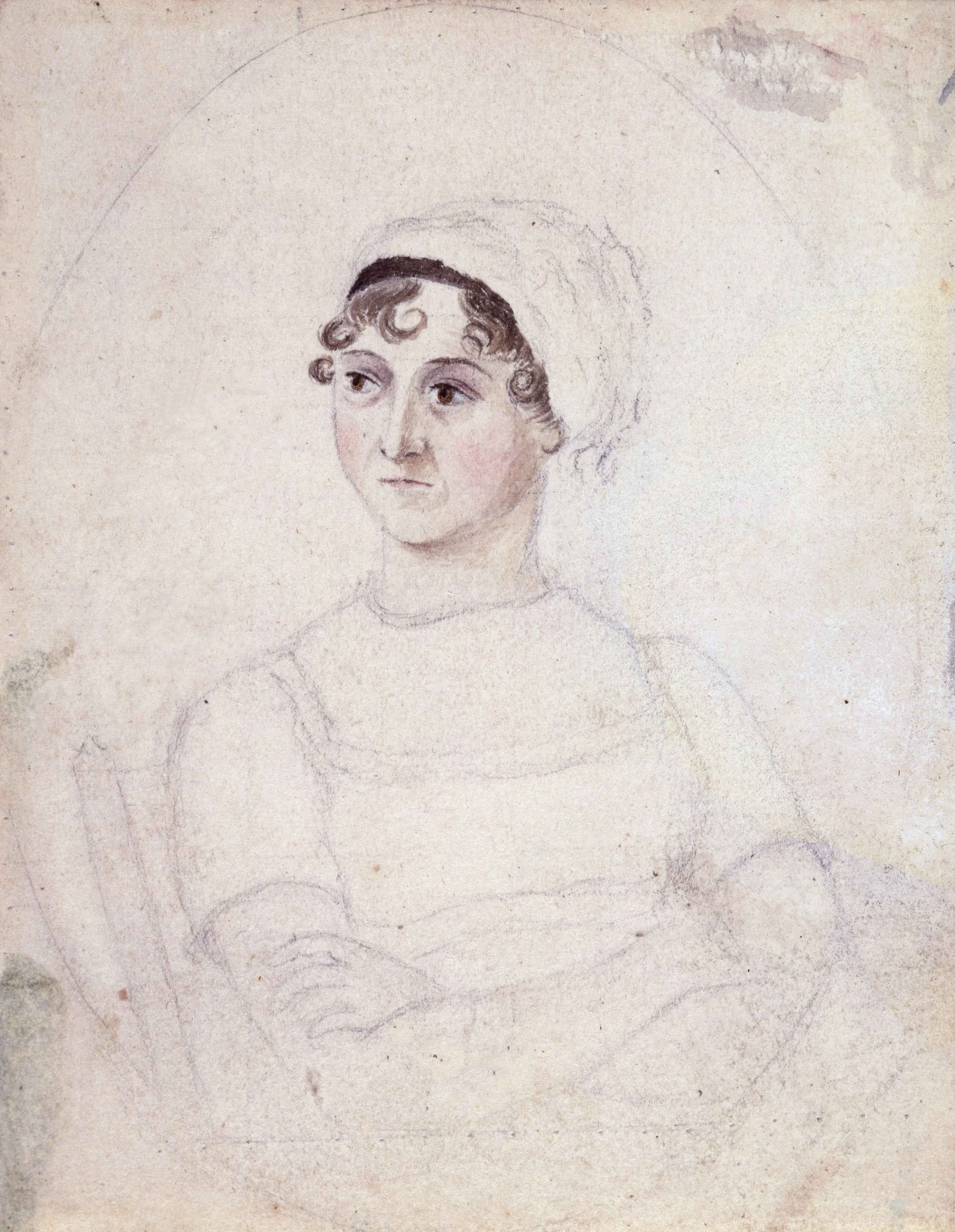
A sketch of Jane Austen drawn by her sister, Cassandra Austen
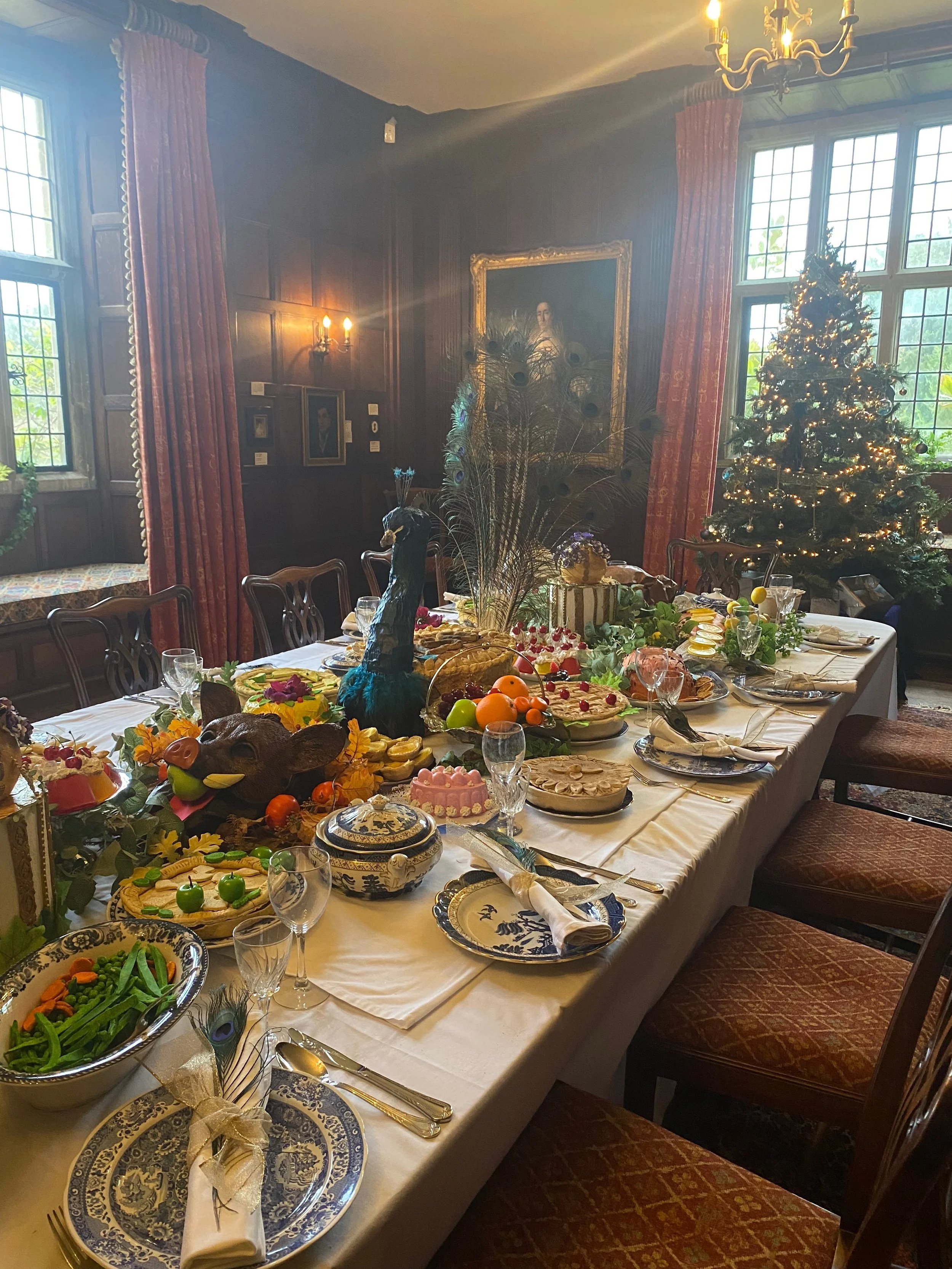
The oak-panelled dining room in Chawton House, with the table set for a Regency feast when I visited in November. Jane Austen dined here – did Emily’s grandfather too?