The best mince pies
With the plum puddings already prepared on Stir-up Sunday, attention turns to mince pies! A recipe for ‘very good’ mincemeat appears on the first page of Emily’s recipe book, courtesy of Mrs W. Powell (whose identity I have not yet discovered). English people are generally aware that mincemeat refers to a fruity mixture, not a meaty one – but this is not universal knowledge across the world. In Australia, for example, mince pies found in supermarkets at Christmastime are labelled ‘fruit mince pies’ so as not to be mistaken for the kind you eat with tomato sauce!
Originally, though, mince pies did contain meat, usually beef, veal or even ox tongue, to enrich the fruit. They were a Christmas speciality by the sixteenth century but were banished by the killjoy Puritans in the 1640s before being restored, along with the monarchy, in 1660. Around this time, some cooks began to replace the meat with beef suet, and by the nineteenth century, recipes were available both with and without meat. Eliza Acton’s recipe for mince pies, published in 1845, includes both diced beef and suet. Mrs Powell’s recipe does not include meat.
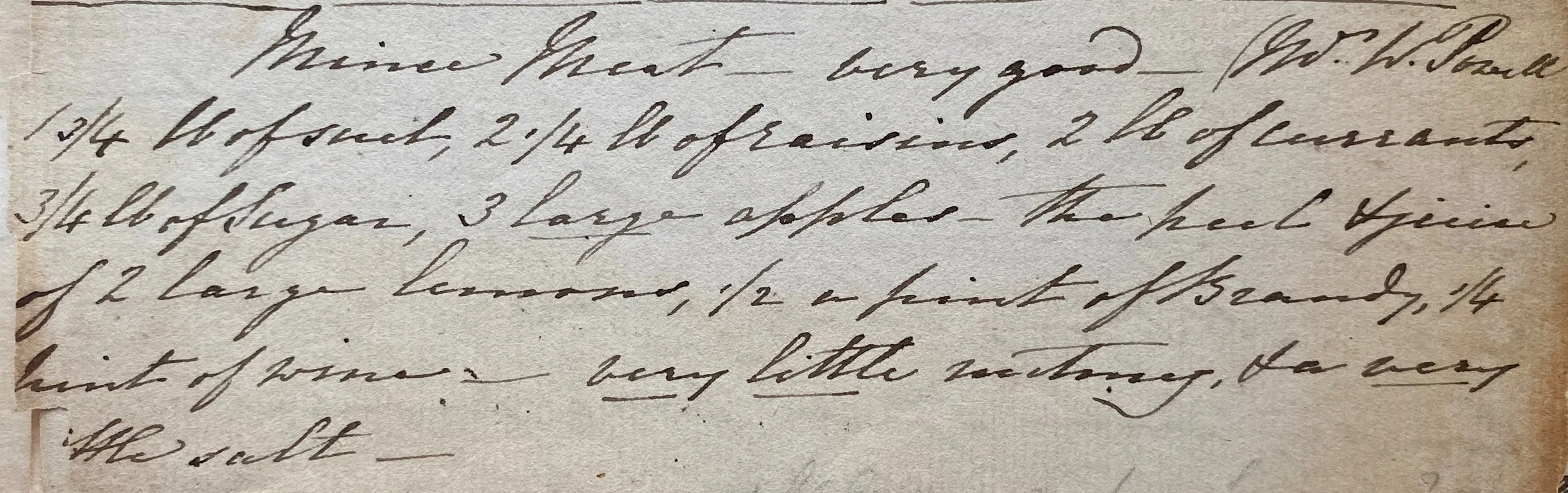
Mince Meat – very good / Mrs W. Powell
1 3/4 lb of suet, 2 1/4 lb of raisins, 2 lb of currants, 3/4 lb of Sugar, 3 large apples – the peel & juice of 2 large lemons, 1/3 a pint of Brandy, 1/4 pint of wine – very little nutmeg, & a very little salt –
Not for the first time when using Emily’s recipe book, I decided to halve the recipe and a good job I did because it still made an enormous quantity. It just shows the scale on which recipes were being made in houses such as Emily’s home, Beechland.
Mix together 400g suet (I used vegetable suet but use beef suet if you want to be really authentic), 480g raisins, 450g currants and 170g brown sugar.
Peel 2 Bramley apples, cut into quarters and grate. Add the grated apple to the fruit mixture along with the rind and juice of a lemon.
Stir in 140ml brandy, 70ml wine (I used red), a small grating of nutmeg and a pinch of salt.
The mixture is probably best left to mature for a few days but I made up a batch of mince pies immediately, using 200g shortcrust pastry*, and baked in a preheated 180° oven for 20 minutes. And at the risk of sounding boastful, I think these were probably the nicest mince pies I have ever eaten - ‘very good’ is an understatement! All credit to the elusive Mrs Powell for her excellent recipe. It’s a keeper.
* I make this quickly and easily by blending 200g plain flour, 100g butter and a pinch of salt in a mixer and gradually adding just enough cold water to form a dough. Takes less than a minute.
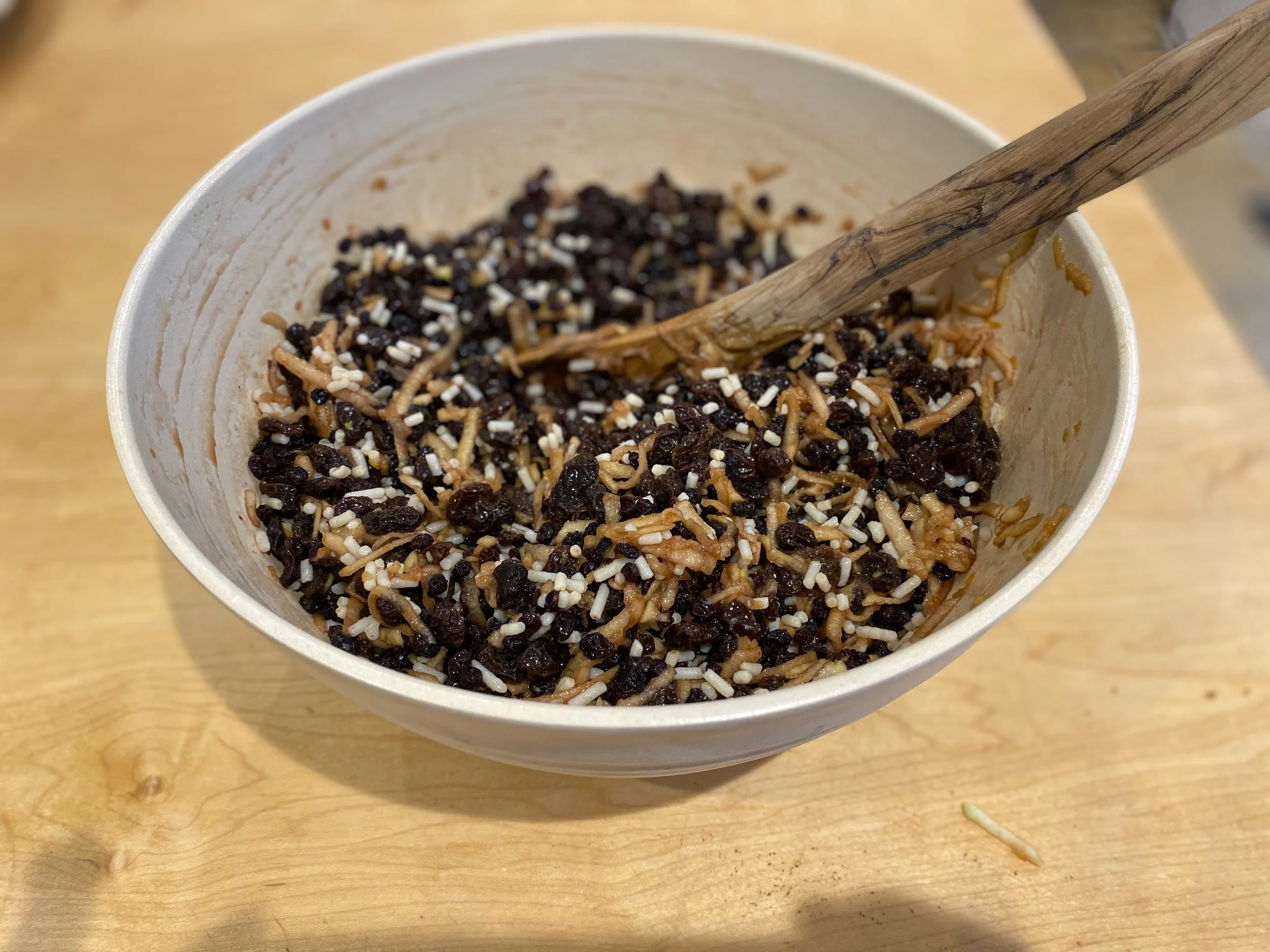
The mincemeat mixture
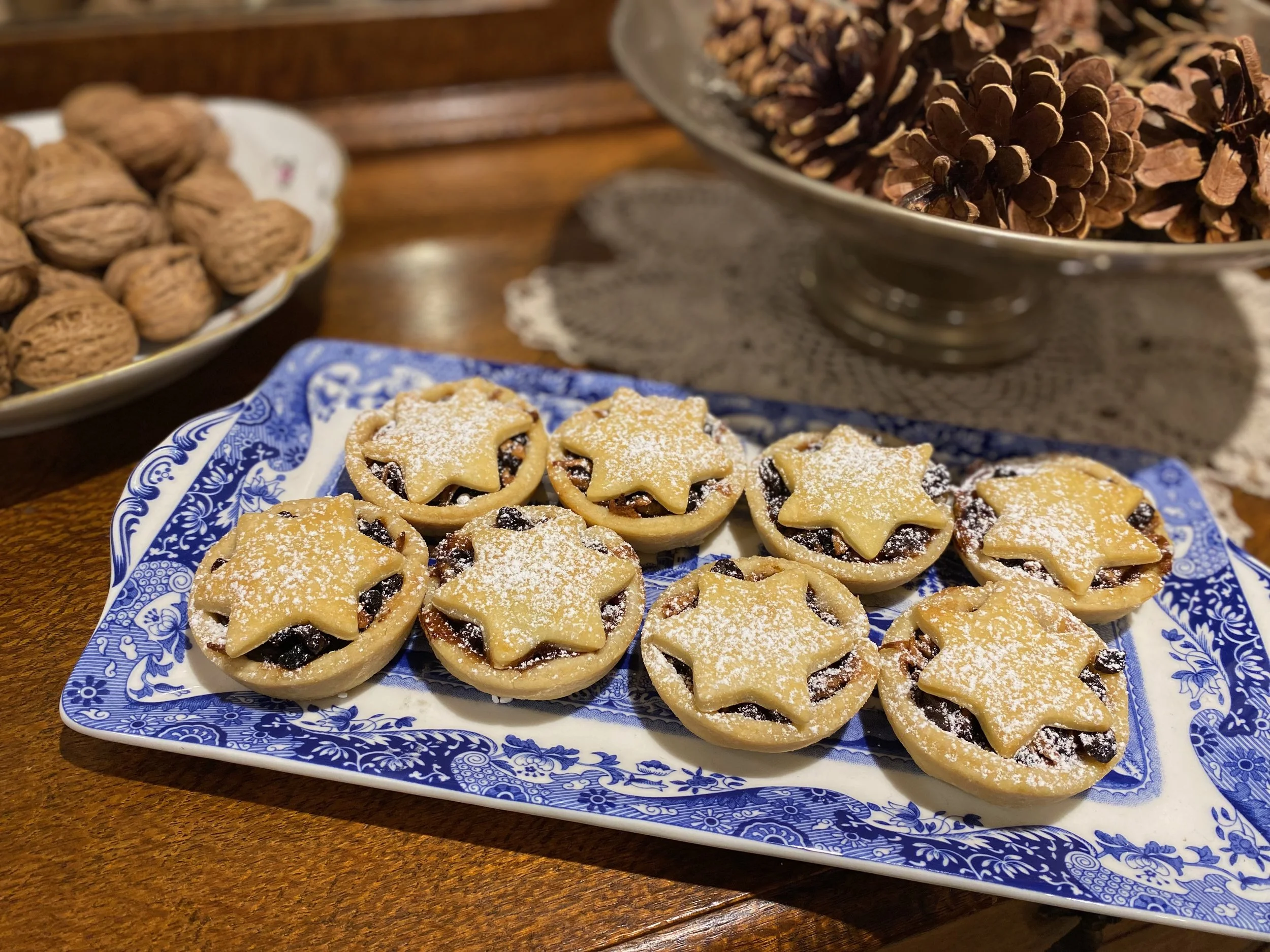
And the tempting platter of mince pies!