For the love of coffee – with or without giblets
I have no truck with bad coffee and neither, it seems, did Emily. She includes in her book a recipe for making good coffee, given to her by her aunt Martha, Lady Miller. As young women, Martha and Emily most likely ate toast for breakfast, with a cup of tea, coffee or hot chocolate. Later in life, they were probably enticed by the more elaborate breakfasts with a selection of hot dishes that were an invention of the Victorian era.
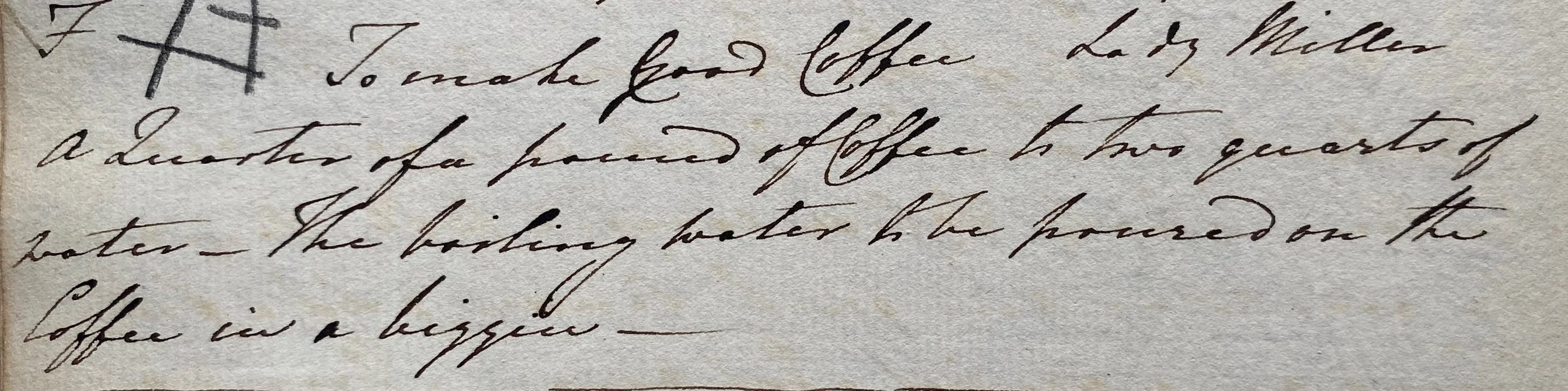
To make Good Coffee / Lady Miller
A Quarter of a pound of Coffee to two quarts of water – the boiling water to be poured on the Coffee in a biggin.
In metric measurements, this equates to about 110g of coffee to 2.2 litres of water – very close to the recommendation to brew percolator coffee using a ratio of 1:17. A ‘biggin’ was an early form of coffee percolator, invented in 1803 by George Biggin and consisting of a pot with either a top part with a perforated base or a mesh insert to act as a coffee filter. Almost certainly, there was one to be found in Emily’s household.
The Blaauw family may have wished they had a coffee biggin with them when they stayed overnight in an inn in Folkstone in December 1843, after a holiday in France. Emily’s daughter, 10-year-old Emily Hannah, kept a diary of the trip and on 18 December wrote:
‘We breakfasted at a table d’hote with a quantity of people, and the French steward – horrible coffee …’
I imagine that Emily particularly longed for a good coffee that morning, because she had not slept well, as Emily Hannah relayed in this amusing insight into her mother’s character:
‘Mama dreamed of mice crawling over her, and roused up her unfortunate husband to hunt for them, which he laughed at heartily – to the great amusement of their next door neighbours, only divided by a thin papered board.’
Coffee was introduced to England in the mid-seventeenth century, becoming increasingly popular in the eighteenth century when coffee houses began appearing in towns and cities, especially London. They were venues for political meetings, doing business and trading (Lloyd’s of London and the London Stock Exchange both have their origins in coffee houses), or simply chewing the fat – literally as well as metaphorically – over a cup of coffee. One of these establishments was the British Coffee House at 26–27 Cockspur Street, which existed from around 1710 until 1886.
In her book, Emily includes a recipe for giblet* soup from ‘the cook at the British Coffee House’. Although coffee houses became less bawdy during the nineteenth century, they were not typically frequented by women of Emily’s social standing. Perhaps her husband William enjoyed the soup and asked for the recipe, so that he might enjoy it at home. In any case, the recipe invokes the atmosphere of these institutions that were once an integral part of British culture.
I’d rather drink the coffee than the giblet soup but I suspect it was rather tasty – especially with that pint of Madeira!
*The heart, liver and gizzard of poultry
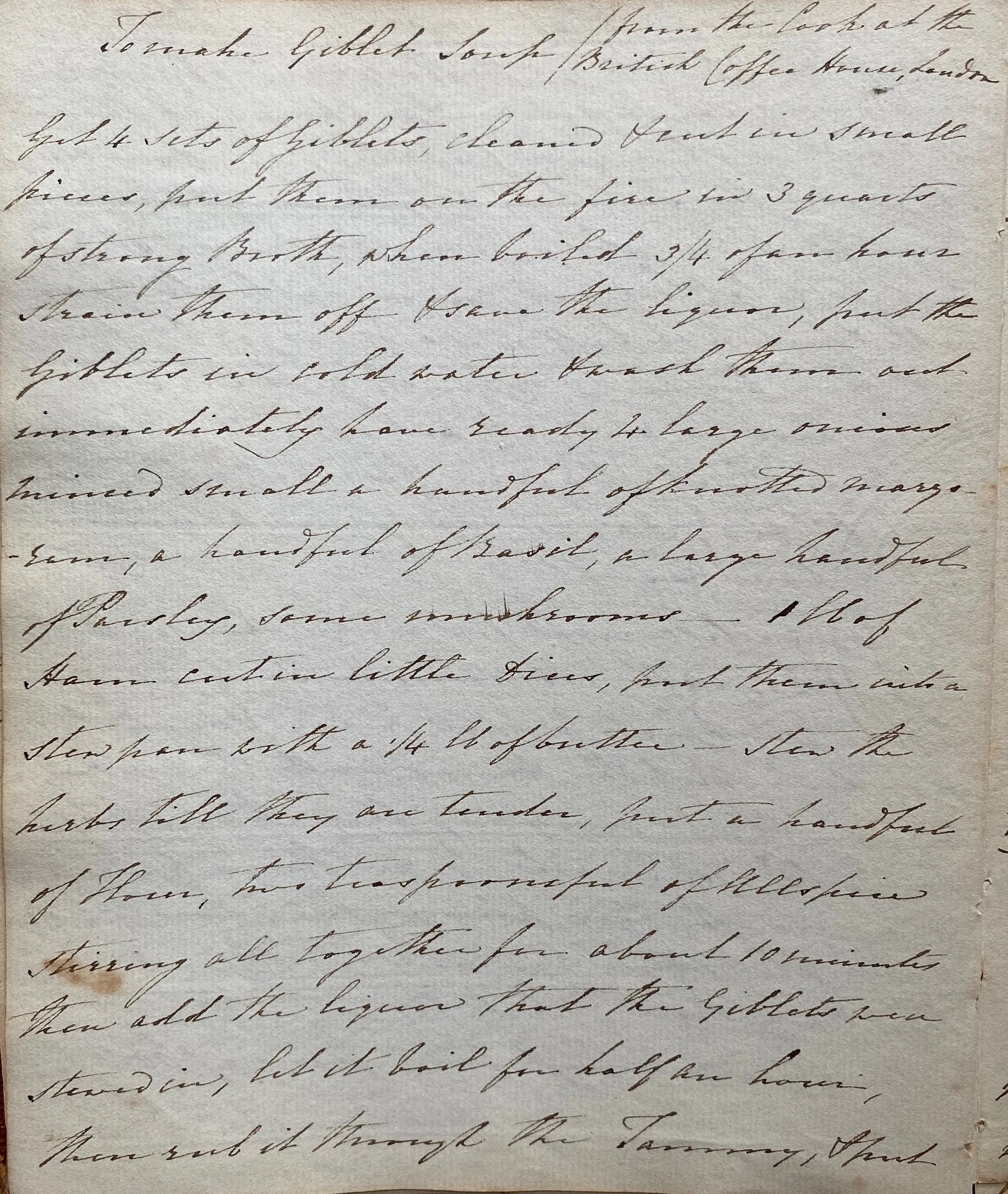
To make Giblet Soup / from the Cook at the British Coffee House, London
Get 4 sets of Giblets, cleaned & cut in small pieces, put them on the fire in 3 quarts of strong Broth, when boiled 3/4 of an hour strain them off & save the liquor, put the Giblets in cold water & wash them and immediately have ready 4 large onions minced small a handful of knotted marjoram, a handful of Basil, a large handful of Parsley, some mushrooms – 1lb of Ham cut in little dices, put them into a stew pan with a 1/4 lb of butter – stew the herbs till they are tender, put a handful of Ham, two teaspoonsful of Allspice stirring all together for about 10 minutes then add the liquor that the Giblets were stewed in, let it boil for half an hour, then rub it through the Tammy*, & put the Giblets & soup together, boil them up with a pint of Madeira & season it with cayenne Pepper & salt to your taste – NB when the Giblets are old they require more stewing –
* A ‘tamis’ (pronounced tammy as Emily spelled it) is a drum-shaped fine sieve used for straining liquids or aerating flour
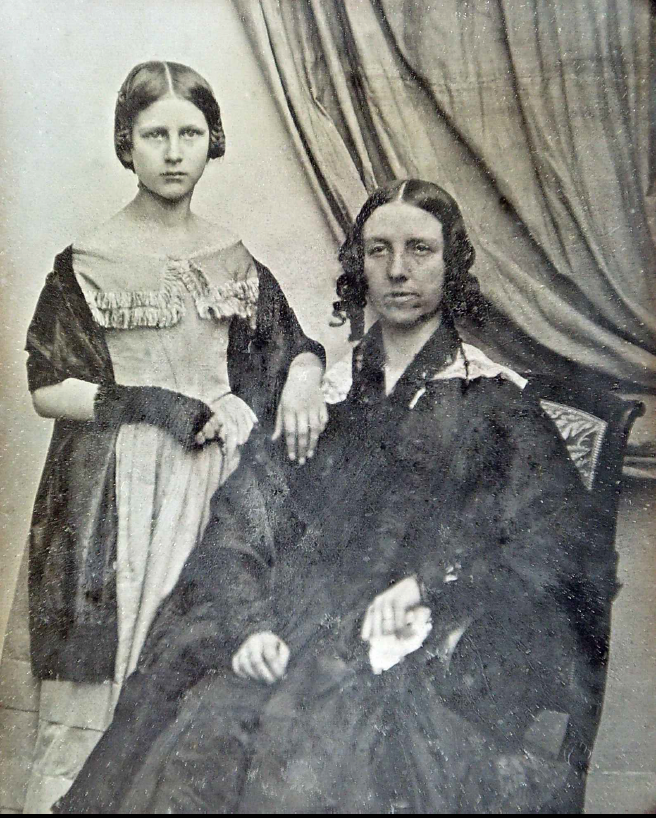
Emily and her daughter Emily Hannah on their visit to France in 1843. They were photographed in Dieppe by Félix Devisuzanne using the new daguerreotype process.
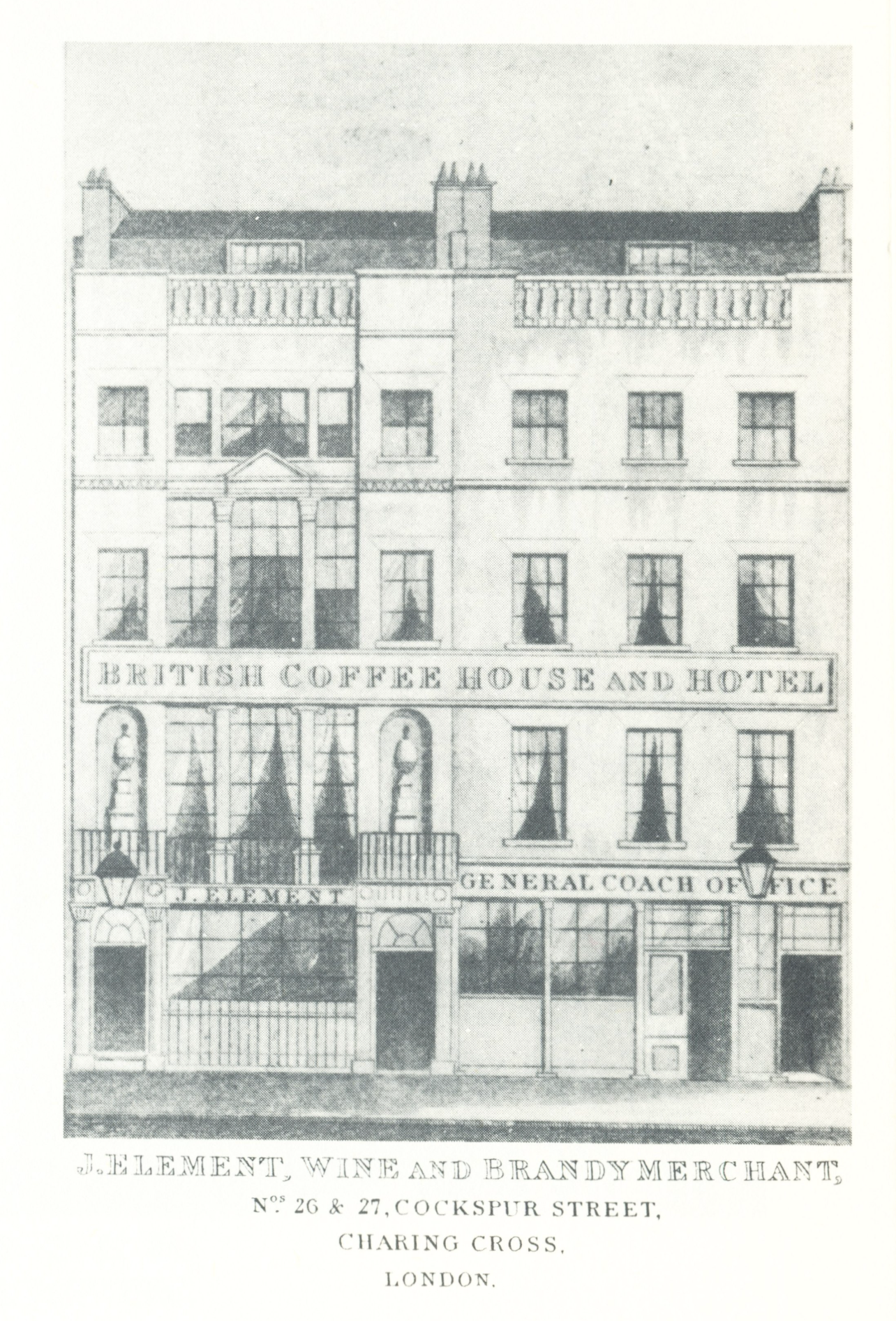
Tallis’s London Street Views, c. 1839